Sign-up for the ASTC Newsletter!

    • Home
    • About ASTC
      • What is a Theatre Consultant?
      • Why an ASTC Member
      • FAQ
      • Officers & Liaisons
      • ASTC Programs
    • Members
      • ASTC Membership Roster
      • ASTC Fellows
      • Prospective Members
      • ASTC Membership and Application FAQs
    • Newsletters
    • Publications
      • Position Papers
    • ASTC News
    • Venue Challenge
    • Contact
      Sign-up for the ASTC Newsletter!

      • Home
      • About ASTC
        • What is a Theatre Consultant?
        • Why an ASTC Member
        • FAQ
        • Officers & Liaisons
        • ASTC Programs
      • Members
        • ASTC Membership Roster
        • ASTC Fellows
        • Prospective Members
        • ASTC Membership and Application FAQs
      • Newsletters
      • Publications
        • Position Papers
      • ASTC News
      • Venue Challenge
      • Contact
        Sign-up for the ASTC Newsletter!

        • Home
        • About ASTC
          • What is a Theatre Consultant?
          • Why an ASTC Member
          • FAQ
          • Officers & Liaisons
          • ASTC Programs
        • Members
          • ASTC Membership Roster
          • ASTC Fellows
          • Prospective Members
          • ASTC Membership and Application FAQs
        • Newsletters
        • Publications
          • Position Papers
        • ASTC News
        • Venue Challenge
        • Contact
          Sign-up for the ASTC Newsletter!

          • Home
          • About ASTC
            • What is a Theatre Consultant?
            • Why an ASTC Member
            • FAQ
            • Officers & Liaisons
            • ASTC Programs
          • Members
            • ASTC Membership Roster
            • ASTC Fellows
            • Prospective Members
            • ASTC Membership and Application FAQs
          • Newsletters
          • Publications
            • Position Papers
          • ASTC News
          • Venue Challenge
          • Contact

          • Home
          • About ASTC
            • What is a Theatre Consultant?
            • Why an ASTC Member
            • FAQ
            • Officers & Liaisons
            • ASTC Programs
          • Members
            • ASTC Membership Roster
            • ASTC Fellows
            • Prospective Members
            • ASTC Membership and Application FAQs
          • Newsletters
          • Publications
            • Position Papers
          • ASTC News
          • Venue Challenge
          • Contact

          • Home
          • About ASTC
            • What is a Theatre Consultant?
            • Why an ASTC Member
            • FAQ
            • Officers & Liaisons
            • ASTC Programs
          • Members
            • ASTC Membership Roster
            • ASTC Fellows
            • Prospective Members
            • ASTC Membership and Application FAQs
          • Newsletters
          • Publications
            • Position Papers
          • ASTC News
          • Venue Challenge
          • Contact
          • Home
          • ASTC News
          • Theatre Design - Did You Know?
          • Did You Know – Ladder Changes

          Did You Know – Ladder Changes
          Published by Peter Scheu on August 7, 2020
          Categories
          • Theatre Design - Did You Know?
          • Theatre Design Article
          Tags

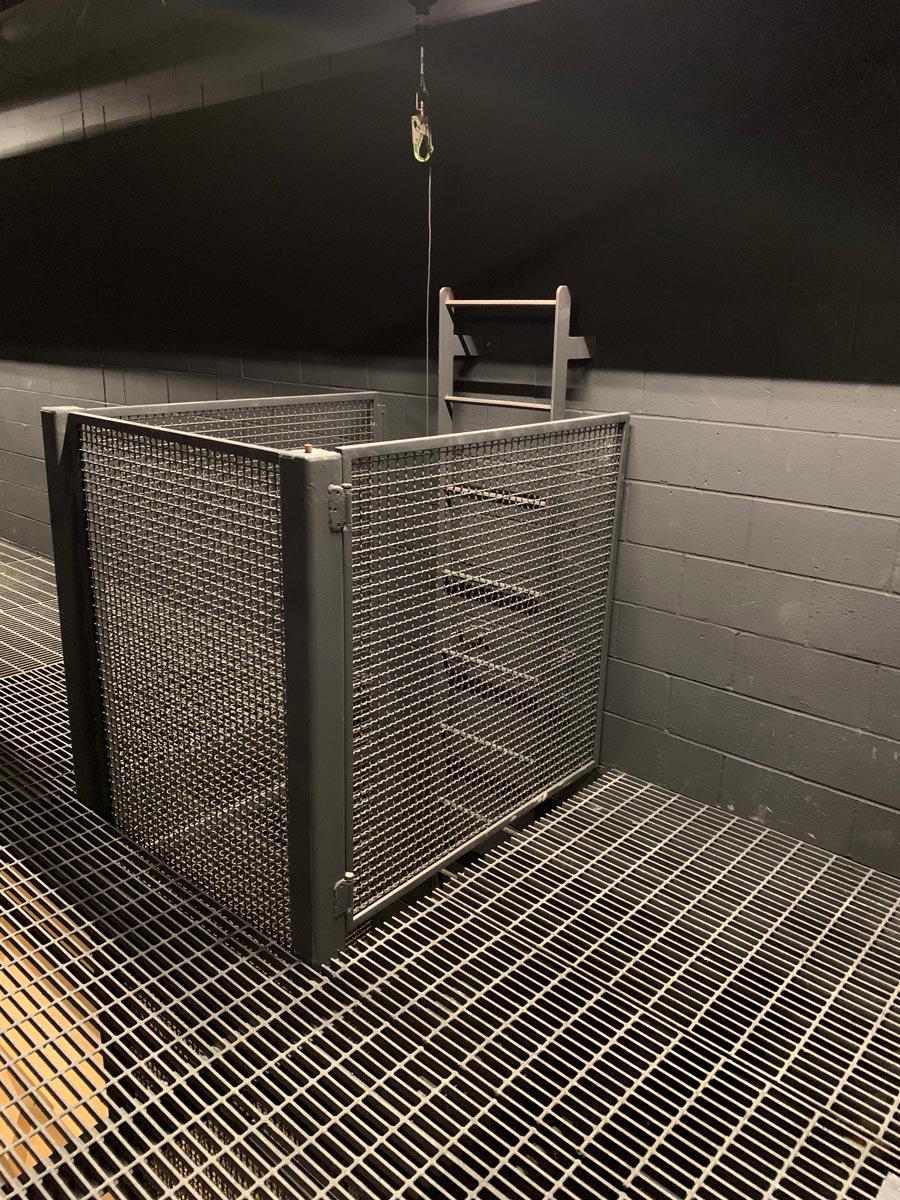
          Ladder with attachment point for a vertical lifeline above. Photo by Peter Scheu, ASTC.

          Access ladders to all sorts of places in a theatre are common. Loading galleries, the gridiron, spotlight positions, front of house lighting bridges, and box booms are some of the many locations that technicians need to reach safely during the course of their regular workday.

          Whenever possible, straight ladders should be avoided as they are the most difficult to use, especially if one needs to carry tools or equipment. Many times, these items must be hoisted up separately. Ships ladders, staircases, and direct, same level access are always preferred to mitigate or eliminate the danger of a fall. This is especially important in non-professional venues like High School auditoriums and Community Theatre spaces.

          When a straight ladder is the only option, there are building codes and OSHA regulations that must be considered. Until very recently all that was required by OSHA Section 1910.27 was that there be a “resting” landing every 30 feet, and the ladder had to be caged.

          In 2016, OSHA made significant changes to the requirements to new and existing fixed ladder systems, per this excerpt from the November 2016 “OSHA Fact Sheet” (OSHA Document DSG FS-3903 https://www.osha.gov/Publications/OSHA3903.pdf):

          “The new rule phases in a requirement for employers to have ladder safety or personal fall arrest systems for fixed ladders that extend more than 24 feet, and phases out the use of cages or wells for fall protection under the following timeline: Starting in two years (2019), all new fixed ladders and replacement ladder/ladder sections must have a ladder safety or personal fall protection system. For existing ladders, within two years, employers must install a cage, well, ladder safety system, or personal fall arrest system on fixed ladders that do not have any fall protection. Within 20 years, all ladders extending more than 24 feet must have a ladder safety or personal fall arrest system.”
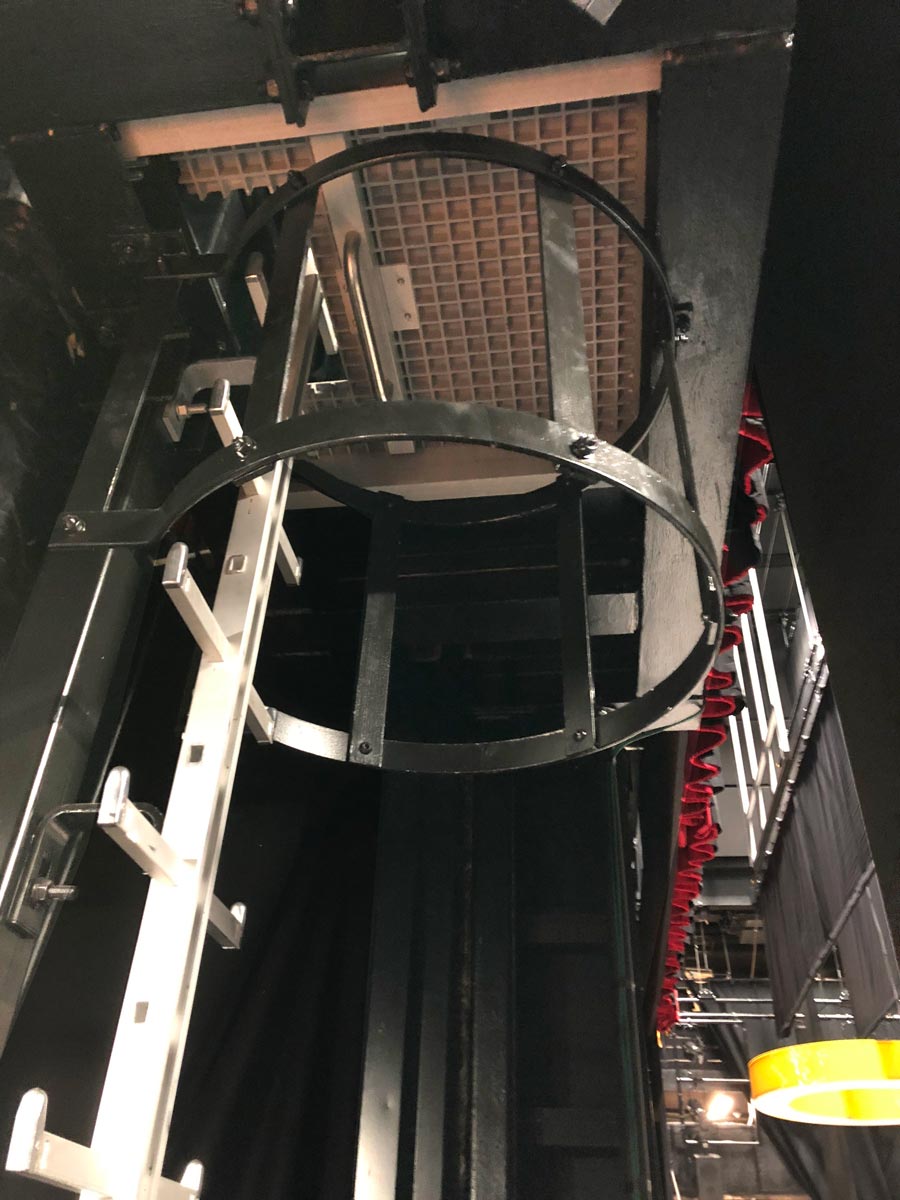
          In the UK, some ladders designed for fall arrest have a vertical track. From the Royal Academy of Music in London. Photo by Peter Rosenbaum, ASTC.

          If your next project cannot avoid having straight ladders for access to technical spaces, remember that fall protection systems are now required, and should be designed and specified to meet the venue and employee’s needs.  Be aware that fall protection systems frequently require infrastructure to be integrated into the design of a facility to accommodate the structural attachment of the equipment. An ASTC consultant, working with a specialized fall protection system designer, can provide guidance on how the system can be incorporated into a venue.

          By Peter Scheu, ASTC

          Disclaimer: Any views or opinions expressed in this article are solely those of the author and do not necessarily represent those of the American Society of Theatre Consultants. This article is for general information only and should not be substituted for specific advice from a Theatre Consultant, Code Consultant, or Design Professional, and may not be suitable for all situations nor in all locations.

          Share

          Related posts

          March 9, 2026

          Designing Accessible Backstage and Onstage Spaces


          Read more
          December 17, 2025

          Why Terminate DMX Cables?


          Read more
          December 9, 2025

          Did You Know – Get with the Program?


          Read more
          ✕

          Recent Posts

          • ASTC – USITT Renovation Challenge 2027 Applications Now Available
          • Len Auerbach, FASTC Honored with USITT Distinguished Achievement Award in Architecture
          • ASTC Announces New Fellows and Members at 2026 Annual Meeting
          • ASTC Seeks Participants for Performing Arts Restroom Study Survey
          • Designing Accessible Backstage and Onstage Spaces
          • Why Terminate DMX Cables?
          • ASTC Forum Held In Charleston, SC

          Categories

          © 2025 American Society of Theatre Consultants
          DMCA.com Protection Status
                       
          Member Login | Credits | Privacy | Terms