
Sign-up for the ASTC Newsletter!

    • Home
    • About ASTC
      • What is a Theatre Consultant?
      • Why an ASTC Member
      • FAQ
      • Officers & Liaisons
      • ASTC Programs
    • Members
      • ASTC Membership Roster
      • ASTC Fellows
      • Prospective Members
      • ASTC Membership and Application FAQs
    • Newsletters
    • Publications
      • Position Papers
    • ASTC News
    • Venue Challenge
    • Contact
      Sign-up for the ASTC Newsletter!

      • Home
      • About ASTC
        • What is a Theatre Consultant?
        • Why an ASTC Member
        • FAQ
        • Officers & Liaisons
        • ASTC Programs
      • Members
        • ASTC Membership Roster
        • ASTC Fellows
        • Prospective Members
        • ASTC Membership and Application FAQs
      • Newsletters
      • Publications
        • Position Papers
      • ASTC News
      • Venue Challenge
      • Contact
        Sign-up for the ASTC Newsletter!

        • Home
        • About ASTC
          • What is a Theatre Consultant?
          • Why an ASTC Member
          • FAQ
          • Officers & Liaisons
          • ASTC Programs
        • Members
          • ASTC Membership Roster
          • ASTC Fellows
          • Prospective Members
          • ASTC Membership and Application FAQs
        • Newsletters
        • Publications
          • Position Papers
        • ASTC News
        • Venue Challenge
        • Contact
          Sign-up for the ASTC Newsletter!

          • Home
          • About ASTC
            • What is a Theatre Consultant?
            • Why an ASTC Member
            • FAQ
            • Officers & Liaisons
            • ASTC Programs
          • Members
            • ASTC Membership Roster
            • ASTC Fellows
            • Prospective Members
            • ASTC Membership and Application FAQs
          • Newsletters
          • Publications
            • Position Papers
          • ASTC News
          • Venue Challenge
          • Contact

          • Home
          • About ASTC
            • What is a Theatre Consultant?
            • Why an ASTC Member
            • FAQ
            • Officers & Liaisons
            • ASTC Programs
          • Members
            • ASTC Membership Roster
            • ASTC Fellows
            • Prospective Members
            • ASTC Membership and Application FAQs
          • Newsletters
          • Publications
            • Position Papers
          • ASTC News
          • Venue Challenge
          • Contact

          • Home
          • About ASTC
            • What is a Theatre Consultant?
            • Why an ASTC Member
            • FAQ
            • Officers & Liaisons
            • ASTC Programs
          • Members
            • ASTC Membership Roster
            • ASTC Fellows
            • Prospective Members
            • ASTC Membership and Application FAQs
          • Newsletters
          • Publications
            • Position Papers
          • ASTC News
          • Venue Challenge
          • Contact
          • Home
          • ASTC News
          • Theatre Design - Did You Know?
          • Did You Know – The Classic Fourth Wall

          Did You Know – The Classic Fourth Wall
          Published by Robert Long on December 8, 2020
          Categories
          • Theatre Design - Did You Know?
          • Theatre Design Article
          Tags

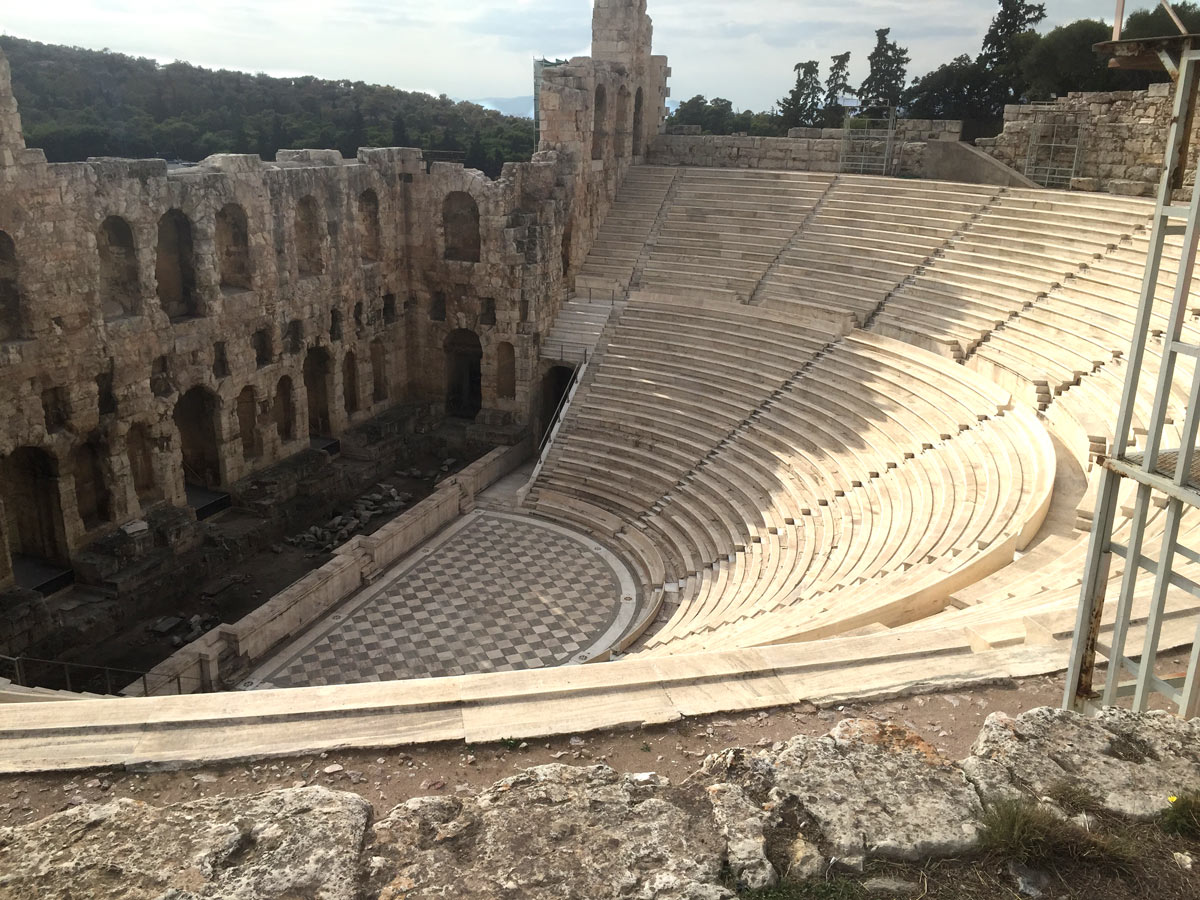
          The partially restored Odeon of Herodes Atticus on the slopes of the Acropolis. The skene is well represented here. Photo by the author.

          What exactly is a proscenium? What is a proscenium arch? Thanks for asking. Let’s have a little chat. The proscenium is roughly equivalent to a picture frame that surrounds a piece of 2-dimensional art. In the theatre world, this “picture frame” separates the audience from the actors and the stage scenery, except when it doesn’t. So, in this format, the proscenium is the opening between the auditorium and the stage, and the proscenium arch is the “frame” that surrounds the opening on the sides and across the top. In other types of seating and stage arrangements, such as arena, thrust and non-conventional staging, there is no proscenium.

          The oldest existing theatre with a true proscenium is thought to be the Teatro Farnese in Parma, Italy, built in 1618. The word proscenium has been adapted from the Greek stage terminology of proskenion or proscaenium that described the area “in front of the skene”. In the Greek theatre, the skene, which means “tent”, evolved into a stone or masonry structure that was at the rear of the performance area. Therefore, the area between the rear stage structure and the audience was the “pro-skene” or what we now refer to as the proscenium.
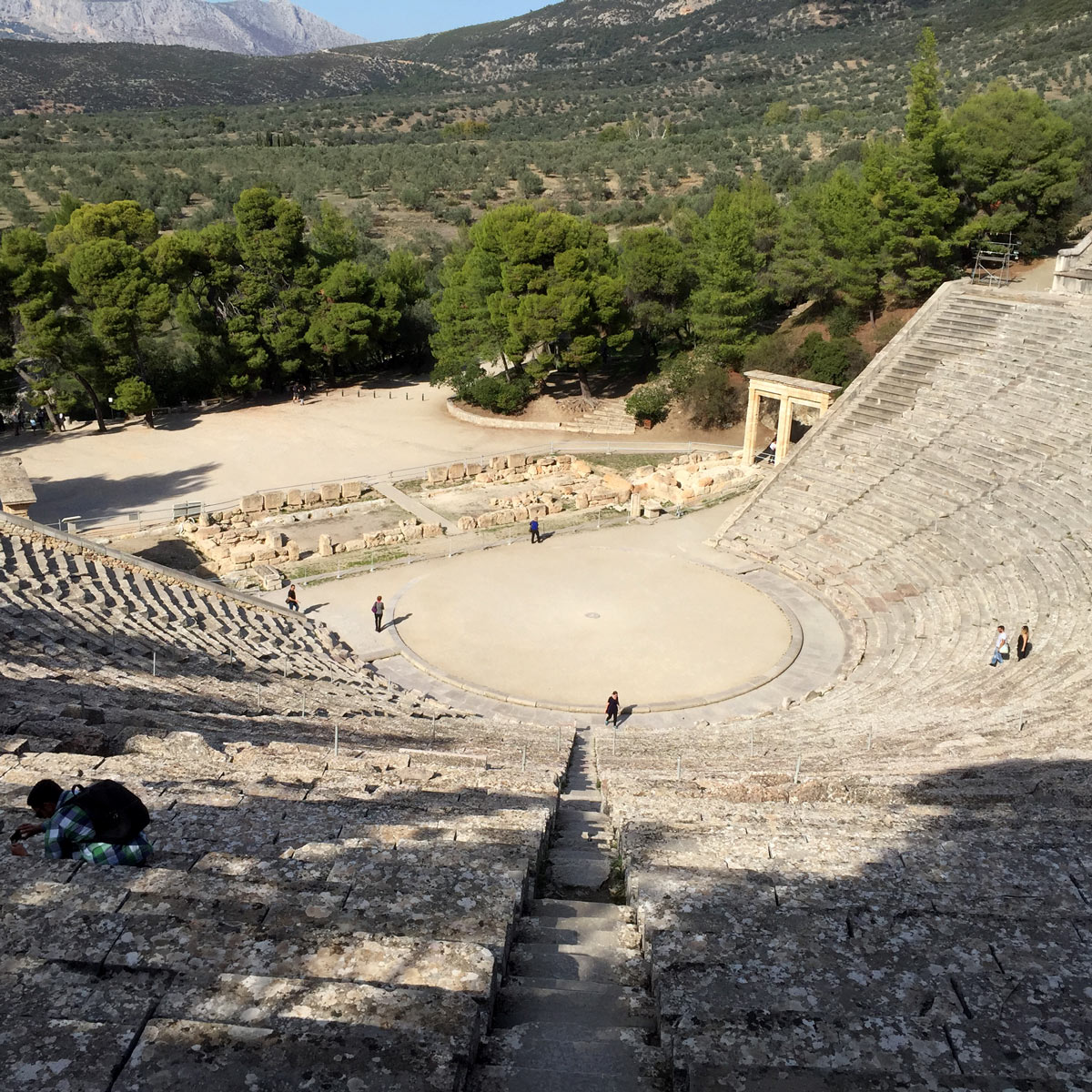
          The remains of the skene structure can be seen at Epidaurus. The pro-skene was the area between the skene and the audience. Photo by the author.

          Theatre dramaturgy (please look up that term on your own) has evolved the concept of the proscenium opening being a “4th wall” through which the audience observes the activities that are presented within the box-like stage. “Breaking the 4th wall” is a reference to when directors instruct the actors to pass through this imaginary barrier to more closely approach the audience from the “apron” of the stage directly in front of the proscenium. This is roughly equivalent to a character stepping out of the television monitor into your living room, but perhaps a little less dramatic.

          A critical decision in the creation of a proscenium opening is to choose the optimum width and height of the opening.   In general, a proportion that reflects the architectural “golden rectangle” of width to height is preferable to an ungainly “letter box” proportion that is too low relative to its width. There are other operational factors that also inform these choices, including the types and variety of performances envisioned for the theatre as well as important code and life-safety issues. Proscenium size is also a key factor when determining the size of the stage volume behind it. Your ASTC theatre consultant is ready, willing and able to help you with determining when to have a proscenium and how to determine its optimum dimensions. Then there is the large House Curtain or Act Curtain or Main Drape that opens and closes the proscenium opening. That’s enough for now. Let’s talk about this big curtain some other time.
          Olympia Theatre

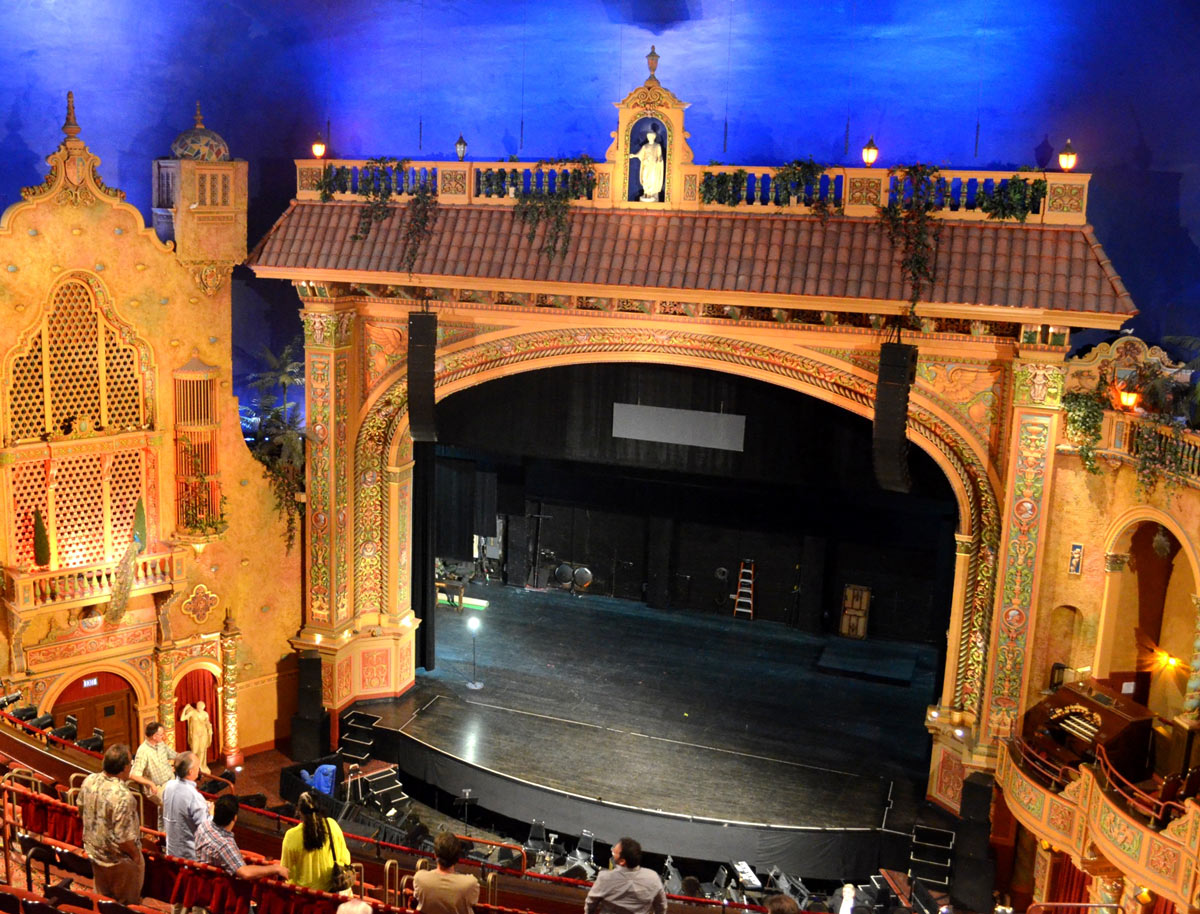
          Proscenium arch at the 1926 Olympia Theatre (at the Gusman Center for the Performing Arts), Miami, FL. Proscenia can be simple or ornate, reflecting architectural tastes at the time of design. Photo by Paul Sanow, ASTC.

          By Robert Long, FASTC

          Disclaimer: Any views or opinions expressed in this article are solely those of the author and do not necessarily represent those of the American Society of Theatre Consultants. This article is for general information only and should not be substituted for specific advice from a Theatre Consultant, Code Consultant, or Design Professional, and may not be suitable for all situations nor in all locations.

          Share

          Related posts

          March 9, 2026

          Designing Accessible Backstage and Onstage Spaces


          Read more
          December 17, 2025

          Why Terminate DMX Cables?


          Read more
          December 9, 2025

          Did You Know – Get with the Program?


          Read more
          ✕

          Recent Posts

          • ASTC – USITT Renovation Challenge 2027 Applications Now Available
          • Len Auerbach, FASTC Honored with USITT Distinguished Achievement Award in Architecture
          • ASTC Announces New Fellows and Members at 2026 Annual Meeting
          • ASTC Seeks Participants for Performing Arts Restroom Study Survey
          • Designing Accessible Backstage and Onstage Spaces
          • Why Terminate DMX Cables?
          • ASTC Forum Held In Charleston, SC

          Categories

          © 2025 American Society of Theatre Consultants
          DMCA.com Protection Status
                       
          Member Login | Credits | Privacy | Terms